Fuel Injectors
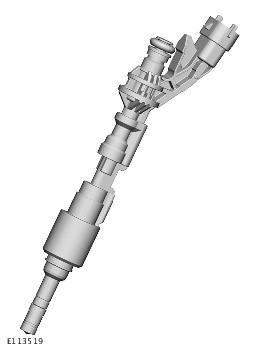
The fuel injectors spray fuel from the fuel rail directly into the combustion chambers. The fuel injectors are installed close to the center of the combustion chambers, between the inlet and exhaust valves and next to the spark plug.
The fuel injectors are a push fit in the fuel rails and the cylinder heads. On each fuel injector, a rubber O-ring seals the head of the fuel injector in the fuel rail. A teflon ring seals the nozzle of the fuel injector in the cylinder head. A clamp locks each fuel injector to the fuel rail.
Each fuel injector contains a solenoid-operated needle valve, which opens when the solenoid winding is energized. While the needle valve is open, fuel is sprayed into the combustion chamber. The solenoid winding is connected to a power feed and a ground from the engine control module (ECM), which operates the fuel injectors with a two stage power supply. Initially the engine control module (ECM) supplies the fuel injectors with 65 V, then once the boost current reaches 11 A the power supply is switched to battery voltage. The engine control module (ECM) meters the amount of fuel injected into the combustion chambers by adjusting the time that the solenoid winding is energized.
There are six holes around the tip of the nozzle through which the fuel is sprayed. Two of the holes direct fuel below the spark plug. The other four holes direct fuel evenly around the remainder of the combustion chamber.
If a fuel injector fails, the engine will suffer from unstable idle speed, poor noise, vibration and harshness (NVH) and poor emissions performance.