Knock Sensors
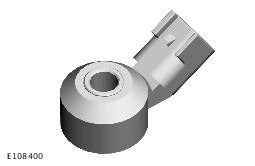
The knock sensors are piezo-ceramic sensors that allow the engine control module (ECM) to employ active knock control and prevent engine damage from pre-ignition or detonation.
Two knock sensors are installed on the inboard side of each cylinder head, one mid-way between cylinders 1 and 2, and one mid-way between cylinders 3 and 4. Each knock sensor is secured with a single screw. On each knock sensor, a two pin electrical connector provides the interface with the engine harness.
The engine control module (ECM) compares the signals from the knock sensors with mapped values stored in memory to determine when detonation occurs on individual cylinders. When detonation is detected, the engine control module (ECM) retards the ignition timing on that cylinder for a number of engine cycles, then gradually returns it to the original setting.
The engine control module (ECM) cancels closed loop control of the ignition system if the signal received from a knock sensor becomes implausible. In these circumstances the engine control module (ECM) defaults to base mapping for the ignition timing. This ensures the engine will not become damaged if low quality fuel is used. The malfunction indicator lamp (MIL) will not illuminate, although the driver may notice that the engine 'pinks' in some driving conditions and displays a drop in performance and smoothness.
The ECM calculates the default value if one sensor fails on each bank of cylinders.