Front/Rear Lamp Condensation - Information Only (LTB00692NAS2)
Reference number: LTB00692NAS2
Supersedes refnos: LTB00692
FRONT/REAR LAMP CONDENSATION - INFORMATION ONLY
TECHNICAL SERVICE BULLETIN
| LAND ROVER: | 2010-2015 LR2, LR4, Range Rover, Range Rover Sport: 2015 Discovery Sport |
| SECTION: | 417-00 |
| AFFECTED VEHICLES: | LR2 (LF) Model Year: 2010-2015 VIN: AH148520-FH439912; Discovery Sport (LC) Model Year: 2015 Onwards VIN: FH500001 Onwards; LR4 (LA) Model Year: 2010 Onwards VIN: AA510178 Onwards; Range Rover Evoque (LV) Model Year: 2012 Onwards VIN: CH600000 Onwards; Range Rover Sport (LW) Model Year: 2014 Onwards VIN: EA300000 Onwards; Range Rover (LG) Model Year: 2013 Onwards VIN: DA100000 Onwards; Range Rover Sport (LS) Model Year: 2010-2013 VIN: AA212145-DA814822; Range Rover (LM) Model Year: 2010-2012 VIN: AA302697-CA393639 |
CONDITION SUMMARY
Situation: Condensation/mist may appear on the inside of front and/or rear exterior lamps.
Cause: Condensation/mist is a natural phenomenon which can occur when there is a temperature difference between the inside and outside of the lamp unit. This condensation is considered to be as a result of normal atmospheric conditions and replacing the light unit will not correct this symptom. With the introduction of clear lenses condensation is likely to be more noticeable but does not affect the performance of the lamp. Condensation will clear when the lights have been on for some length of time and in warmer ambient temperatures.
Action: A lamp that exhibits condensation should be evaluated after a drying time where all the functions have been operated for a minimum of 30 minutes. If the condensation has started to clear during this time, it indicates that the lamp sealing has NOT been breached and will eventually clear. The lamp must NOT be replaced.
SERVICE INFORMATION
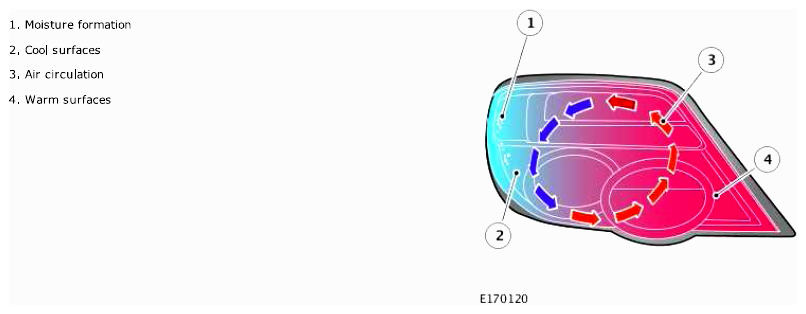
- Condensation or moisture can be more noticeable during the months of spring and autumn when there is a likelihood of a higher moisture content in the air. It can occur when there is a temperature difference on either side of the lens surface. This can often be seen in the evening and morning sunshine or when cold water makes contact with a warm lamp lens. When a lamp is warmed unevenly by the sunshine the surface area in direct sunlight will be approximately 10°C higher than the remainder of the lamp. When warm air circulates within the lamp and makes contact with the colder surfaces moisture can appear on the lens as water condenses out of the warmer air. Condensation may occur when washing a vehicle with cold water on a warm day or when the lamps are warm and vice versa. This is the same phenomena as with the formation of dew on the surface of a glass window pane.
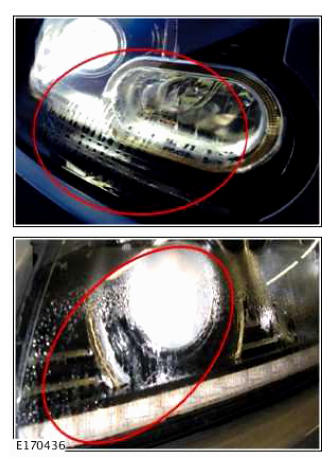
- The illustration shows the following.
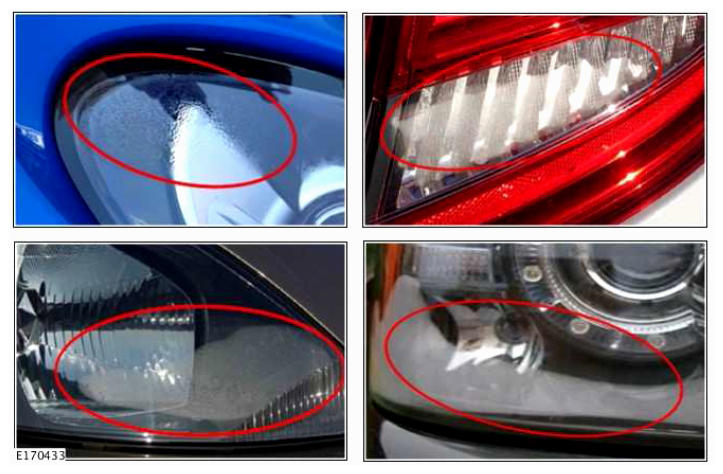
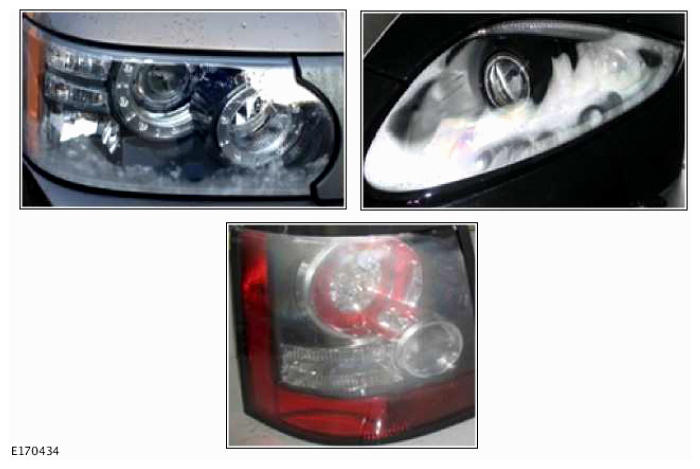
These are examples of normal exterior lamp condensation. This would NOT be covered by Warranty and the lamp should not be replaced.
- No visible streaks, drip marks or droplets in the condensation mist.
- Condensation mist that does not obstruct the view of the lamp Interior.
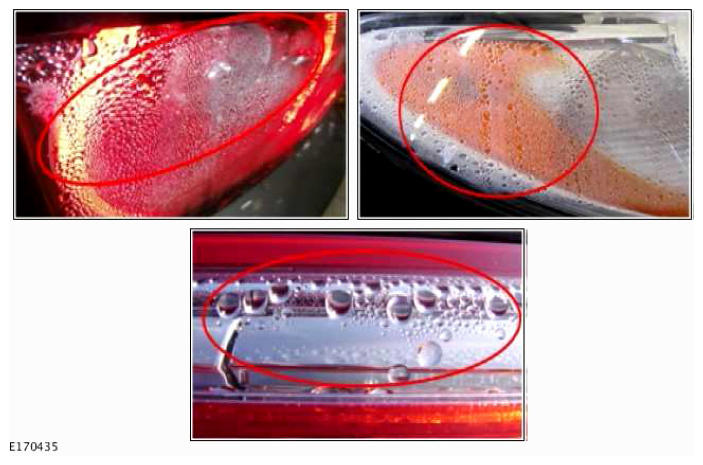
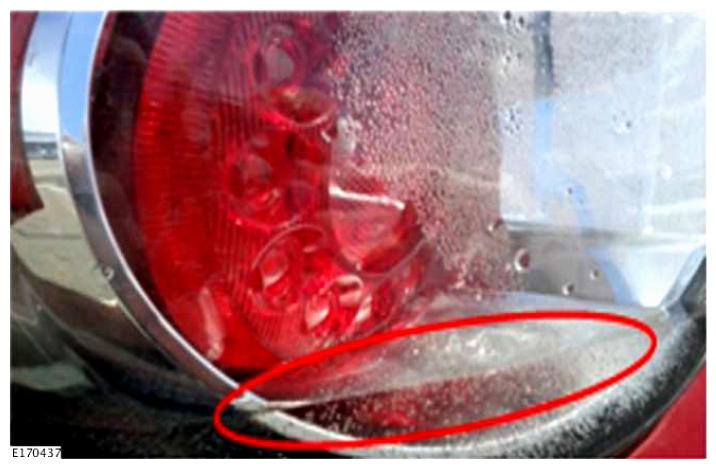
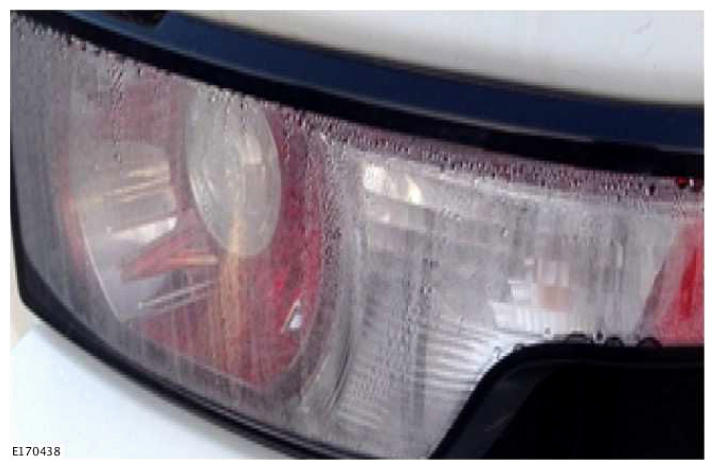
These are examples of abnormal exterior lamp condensation that may be covered by Warranty. Warranty may be accepted providing the lamp does not exhibit any visible signs of external damage.
- Large water droplets.
- Drip marks or streaks In the condensation.
- Standing water within the lamp.
- A thick mist covering the lens with water droplets.