Supplementary Restraint System (SRS) Precautions
The SRS contains components which are potentially hazardous to service personnel if not handled correctly. The following guidelines and precautions are intended to alert personnel to potential sources of danger and emphasize the importance of ensuring the integrity of the SRS components installed to the vehicle.
- The correct procedures must always be used when working on SRS components.
- Persons working on the SRS system must be fully trained and have been issued with the safety guidelines.
- The airbag modules contain extremely flammable and hazardous compounds. Contact with water, acids or heavy metals may produce harmful or explosive results. Do not dismantle, incinerate or bring into contact with electricity before the unit has been deployed.
- Always replace a seat belt assembly that has withstood the strain of a severe vehicle impact or if the webbing shows signs of fraying.
- Allow a period of 2 minutes to elapse after disconnecting the battery before undertaking any work on the SRS system.
- Always disconnect the vehicle battery before carrying out any electric welding on a vehicle installed with an SRS system.
It should be noted that these precautions are not restricted to operations performed when servicing the SRS system. The same care should be exercised when working on ancillary systems and components located in the vicinity of SRS components; these include but are not limited to:
- Steering wheel airbag, clock spring.
- Passenger front airbag.
- Head airbag modules - front and rear.
- Seat belt pre-tensioners.
- SRS harnesses, link leads and connectors.
- Side curtain air bags.
Making the system safe
Before working on or in the vicinity of SRS components, make sure the system is rendered safe by performing the following operations:
- Remove the ignition key.
- Disconnect the battery, earth lead first.
- Wait 2 minutes for the SRS power circuit to discharge before commencing work.
Installation
In order to make sure system integrity, it is essential that the SRS system is regularly checked and maintained so that it is ready for effective operation in the event of a collision. Carefully inspect SRS components before installation. Do not install a part that shows signs of being dropped or improperly handled, such as dents, cracks or deformation.
- Do not install accessories or other objects to trim panels which cover airbags.
- Never install used SRS components from another vehicle or attempt to repair an SRS component.
- When repairing an SRS system, only use genuine new parts.
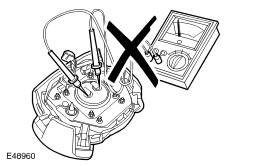
- Never apply electrical power to an SRS component unless instructed to do so as part of an approved test procedure.
- Special fixings are necessary for installing an airbag module - do not use other fixings and make sure that all fixings are tightened to the correct torque.
- Always use new fixings when replacing an SRS component.
SRS component testing precautions
The SRS components are triggered using relatively low operating currents, always adhere to the following :
Handling and storage
Always observe the following precautions when handling SRS components:
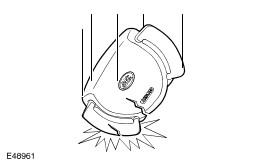
- Never drop an SRS component. The airbag diagnostic control unit is a particularly shock sensitive device and must be handled with extreme care. Airbag modules and seat belt pre-tensioners could deploy if subjected to a strong shock.
- Never wrap your arms around an airbag module. If a module has to be carried, hold it by the cover with the cover uppermost and the base away from your body.
- Never transport airbag modules or seat belt pre-tensioners in the passenger compartment of a vehicle. Always use the luggage compartment of the vehicle for carrying airbag modules and seat belt pre-tensioner units.
- Never attach anything to an airbag cover or any trim component covering an airbag module. Do not allow anything to rest on top of an airbag module.
- Always keep components cool, dry and free from contamination.
- Never apply grease or cleaning solvents to seat belt pre-tensioner units, component failure could result.
- Always store an airbag module with the deployment side uppermost. If it is stored deployment side down, accidental deployment will propel the airbag module with sufficient force to cause serious injury.
- Keep new airbag modules in their original packaging until just prior to installing. Place the old module in the empty packaging for carriage.
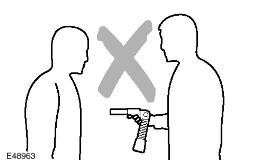
SRS harness and connectors
Always observe the following precautions with regards to SRS system electrical wiring:
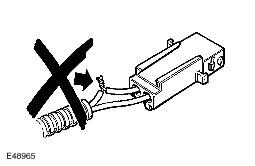
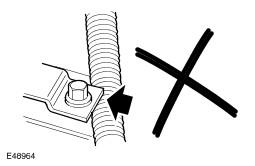
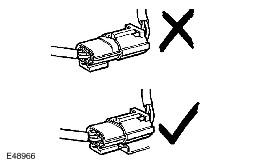
- Never attempt to modify, splice or repair SRS wiring.
- Never install electrical equipment such as a mobile telephone, two-way radio or in-car entertainment system in such a way that it could generate electrical interference in the airbag harness. Seek specialist advice when installing such equipment.
Impact crash sensors - inspection
After any degree of side or frontal body damage, inspect the impact crash sensors. Replace a crash sensor if there is any sign of damage.
Clock spring
- Do not unlock and rotate the clock spring when it is removed from the vehicle.
- Do not turn the road wheels when the clock spring is removed from the vehicle.
- Always make sure the clock spring is removed and installed in its central position and with the front road wheels in the straight ahead position - refer to SRS repair section for the correct removal and installation procedure.
- If a new clock spring is being installed, make sure the locking tab holding the spring's rotational position is not broken; units with a broken locking tab must not be used.