Occupant Classification System
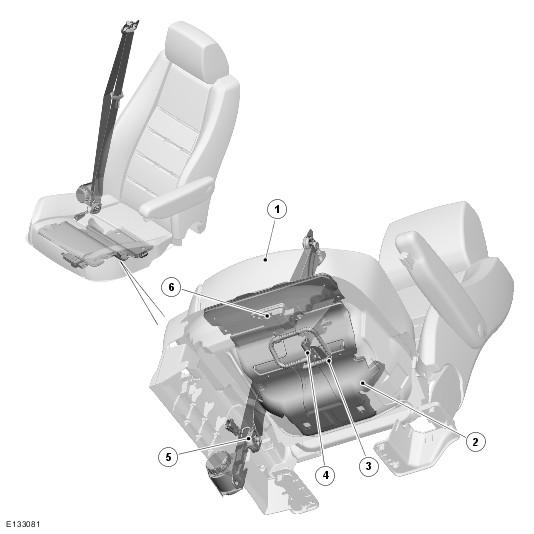
| Item Number | Description |
|---|---|
| 1 | Seat cushion |
| 2 | Pressure pad |
| 3 | Pressure tube |
| 4 | Pressure sensor |
| 5 | Safety belt tension sensor |
| 6 | Occupant classification module |
The occupant classification system comprises an occupant classification module attached to the underside of the seat, a silicon filled bladder and pressure sensor fitted between the cushion foam and the seat pan and a seat belt tension sensor. When an occupant sits on the seat a pressure is created in the bladder and the occupant weight is determined from the pressure generated. The weight is compared against four classification thresholds. These are:
- Empty
- Occupied inhibit status (6 year old child, 3 year old child, rear facing/forward facing 12 month infant seats and booster seats)
- Occupied allow status (weight greater than 5th percentile female) and the air bag enabled/disabled as appropriate
- Indeterminate state.
| Classification | passenger air bag deactivation (PAD) Indicator | SRS Warning Indicator |
|---|---|---|
| Seat unoccupied | OFF | OFF |
| Occupied inhibit | ON | OFF |
| Occupied allow | OFF | OFF |
| Indeterminate state | OFF | ON |
The occupant classification module contains accelerometers and algorithms to compensate for the effects of longitudinal, lateral and vertical forces acting on the vehicle while being driven. The belt tension sensor is used to offset loads forced into the seat by 'cinched' child seats (where a child seat load on the seat is increased by a highly tensioned seat belt) and also dynamic belt loading (off-road/aggressive driving styles).
The belt minder system on vehicles with the occupant classification system uses the restraints control module (RCM) to detect seat occupancy status based on calculations within the restraints control module (RCM), with the instrument cluster then determining whether a seat belt reminder should be activated based on the status of the seat belt buckle switches and the vehicle speed.